

Bulk Corrugated Plastic Sheets: Ordering Guide

Planning a bulk order of corrugated plastic sheets?
Learn what specifications, quantities, customisation and shipping details to prepare before requesting a quote.

How to Order Custom Corrugated Plastic Sheets in Bulk: A Buyer's Checklist
Ordering corrugated plastic sheets in bulk involves more than choosing a size and quantity. For business buyers, the right specifications can affect product performance, manufacturing requirements, transportation and overall costs.
Whether you need corrugated plastic sheets for packaging, signage, construction protection or industrial applications, preparing the right information before requesting a quotation can make the purchasing process more efficient.
This guide explains seven key considerations to help you prepare for a bulk order.
1. Define Your Application
Before selecting a corrugated plastic sheet, consider how and where it will be used.
Different applications may require different material properties. For example:
Packaging: Consider the weight of the products being packed, handling conditions and whether the packaging will be reused.
Signage: Consider printing requirements, installation methods and exposure to outdoor conditions.
Construction protection: Consider the type of surface, expected foot traffic and duration of use.
Industrial applications: Consider impact resistance, handling requirements and any specific environmental conditions.
Identifying the intended application can help suppliers recommend suitable materials rather than relying on thickness or price alone.
2. Choose the Material and Thickness
Corrugated plastic sheets are commonly manufactured using polypropylene (PP). Polyethylene (PE) options may also be available for specific applications. https://www.corrugatedplastic.com.au/our-products/plastic-sheets-%2F-corflute-sheet-%2F-coroplast-%2F-corrugated-pp?utm_source=chatgpt.com
Thickness is an important consideration, but it is not the only factor affecting performance. Sheet weight, internal structure and material formulation can also influence strength and flexibility.
For example, two sheets with the same nominal thickness may perform differently if their weights or internal structures are different.
When preparing an order, consider specifying:
Material type, such as PP or PE
Required thickness in millimetres
Sheet weight in grams per square metre (GSM), if known
Any specific strength or flexibility requirements
If you are unsure which specification is suitable, explain the intended application and operating conditions to the supplier.
3. Confirm Sheet Dimensions
Corrugated plastic sheets are available in standard and customised dimensions.
When ordering in bulk, make sure the required length and width are clearly stated. It is also useful to specify whether the dimensions refer to finished sheets or material that will undergo further cutting or fabrication.
Consider the following questions:
What length and width does your application require?
Will the sheets need to be cut into smaller pieces?
Are there size restrictions for storage or transportation?
Do you require dimensional tolerances for further processing?
Clear dimensions help reduce misunderstandings and make it easier to assess manufacturing and shipping requirements.
4. Identify Customisation Requirements
Depending on the product and manufacturing process, corrugated plastic sheets can be customised in several ways. https://www.corrugatedplastic.com.au/our-products/custom-corrugated-plastic-sheet?utm_source=chatgpt.com
Common options include:
Colour: Standard or custom colours for identification and branding.
Printing: Logos, instructions or other graphics.
Surface treatment: Treatments intended to improve print adhesion.
Die cutting: Custom shapes, slots or other design features.
Additional properties: Requirements such as UV resistance or antistatic performance, where supported by the product specification.
Not every option is necessarily available for every material, size or order quantity.
For printed products, provide artwork files and explain the required printing area, colours and intended use. For custom-cut products, technical drawings or dimensional sketches can also be helpful.
5. Estimate Your Order Quantity
Order quantity is particularly important in bulk manufacturing.
Manufacturers may have minimum order quantities (MOQs), and these can vary depending on the product, material specifications and customisation requirements.
Before requesting a quotation, estimate:
The total number of sheets required
Whether the purchase is a one-time order or a recurring requirement
Whether multiple sizes or colours are needed
Your expected future purchasing volume, if applicable
For example, an order involving one standard specification may have different production considerations from an order requiring several customised variations.
Providing realistic quantities allows the supplier to assess the requirements and explain the available ordering options.
6. Consider Packaging and International Shipping
Shipping can be an important part of the overall purchasing cost, particularly for international buyers.
Although corrugated plastic sheets are relatively lightweight, their dimensions and packaging arrangements can influence freight requirements.
Before placing an order, confirm:
The destination country and delivery location
Preferred shipping method, if any
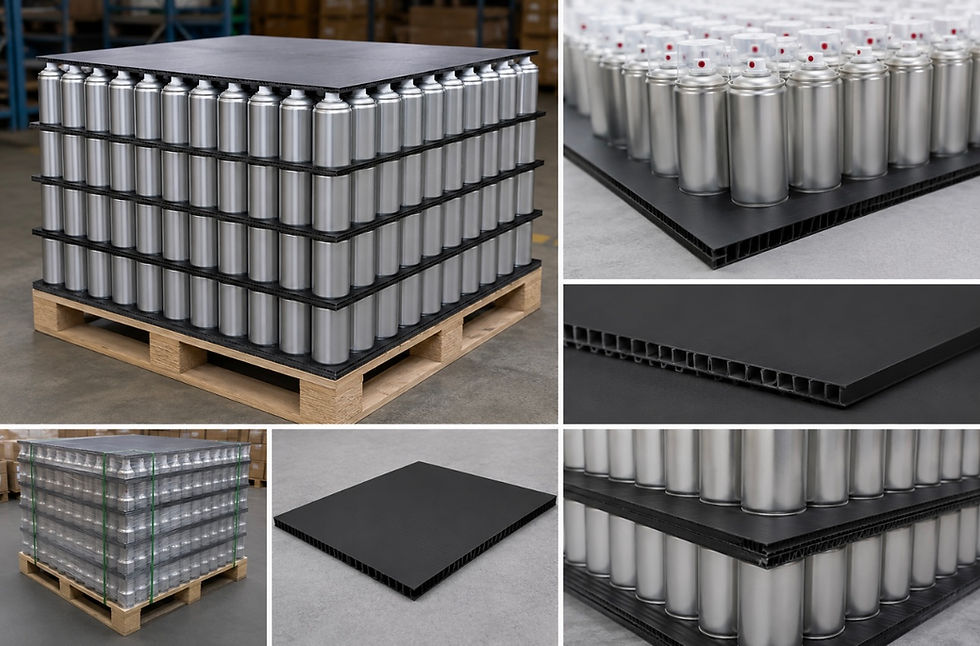
Packaging and pallet requirements
Whether you need a quotation that includes freight
Your required delivery date
International buyers should also clarify the applicable shipping terms and responsibilities before confirming an order.
Delivery arrangements, production schedules and freight costs should be confirmed with the supplier for each project.
7. Prepare Your Request for Quotation (RFQ)
Once you have identified your requirements, the next step is to prepare a Request for Quotation (RFQ). https://www.corrugatedplastic.com.au/contact-us
An RFQ gives the manufacturer the information needed to assess your order and provide an appropriate quotation.
You can use the following checklist.
Bulk Corrugated Plastic Order Checklist
Information | What to Provide |
Intended application | Packaging, signage, protection or another use |
Material | PP, PE or request a recommendation |
Thickness | Required thickness in mm |
Sheet weight | GSM, if specified |
Dimensions | Length × width in mm |
Colour | Standard or custom colour |
Customisation | Printing, cutting, treatments or other requirements |
Order quantity | Estimated number of sheets |
Delivery destination | Country, city or destination port |
Delivery schedule | Required date or approximate timeline |
Supporting documents | Drawings, artwork or reference specifications |
You may not have all the information at the beginning. However, providing as many details as possible can help the supplier understand your needs and identify what still requires clarification.
Ready to Discuss Your Bulk Order?
At Corrugated Plastic Australia, we supply corrugated plastic products for a range of commercial and industrial applications, including custom sheet requirements.
If you are planning a bulk purchase, share your intended application, specifications, estimated quantity and delivery destination with our team.
Request a Quote to discuss the available options for your project.


Comments